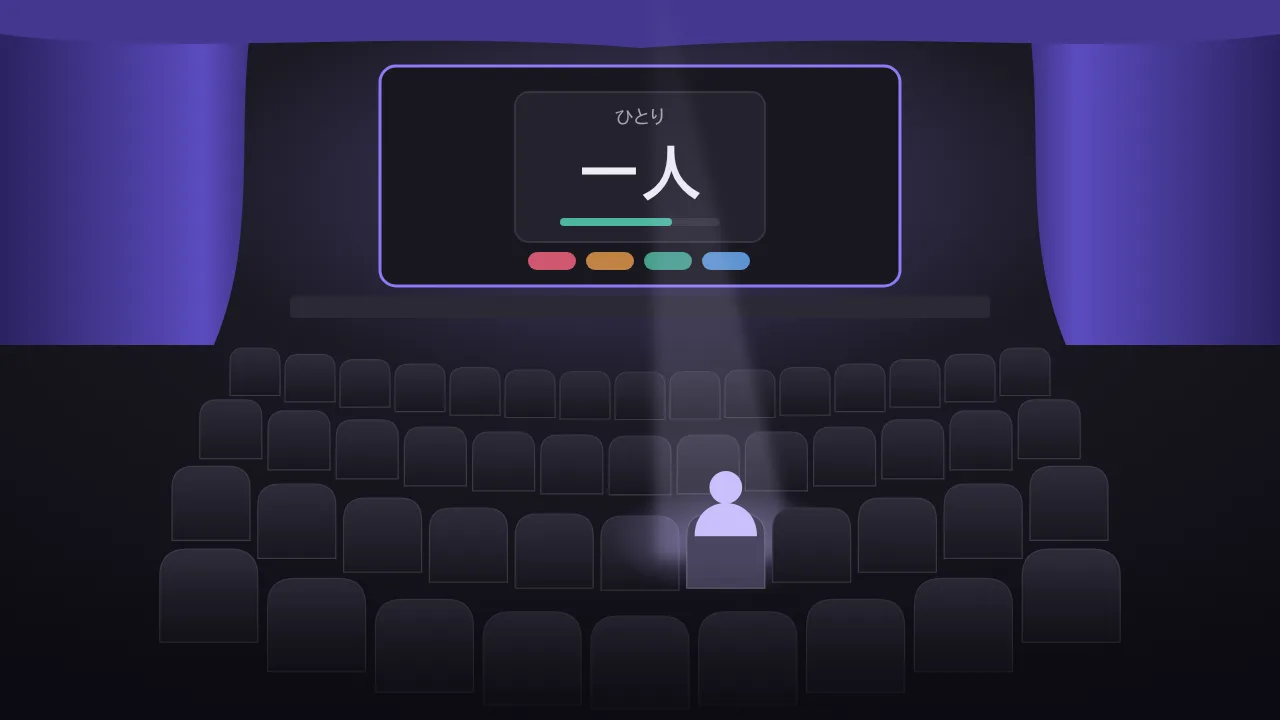
tl;dr: AI tools made software with one user practical, and I love it. But if everyone builds their own, a shared project has to aim ten times higher to be worth sharing.
Another SRS app
It started like it does for so many developers learning a language: I built my own SRS app. I've done that several times before. It's part procrastination, part real frustration with the UX, and part being a cheapskate.
This time is different. This time I actually use it.
My earlier attempts were handcrafted. Many evenings of banging my head against the wall and typing repetitive code. Not studying at all. By the time the app worked, I was tired of it.
Now I vibe code it, and I feel more like a user than an author. I study, I notice what doesn't work for me, and I say so. I'm dogfooding the app instead of building it.
It wasn't instant. For a while I fell into the old trap and built instead of studied. I had to put myself on a build freeze: a week of no new features, only reviews. It worked, and it taught me something about the next part.
Feedback, not code
What I give the app now is feedback. This screen is in the way. That answer should have counted. Reviews got dull, so I asked for new kinds of challenges: a listen mode, a small shooter for vocabulary, an adventure game with a story in Japanese. Some of them suit me, some don't. Trying one costs me an evening, not a month.
An app with one user
When I build for myself, a lot of steps disappear. I go from idea to reality in a couple of minutes. The longest part is typing the idea, not the implementation. No change requests, no PRs, no roadmap. Just the next feature, shipped.
It's addictive. That's why I needed the build freeze.
Replacing more apps
The SRS app was partly about replacing Anki, and partly about bending the UX to my needs. The next one was a reminders app. A classic, I've built a few before. But this time, armed with what I'd learned, I replaced my use of Apple Reminders within a week.
And I'm writing this post in my own Obsidian replacement.
Being a customer
When I pay for software, I become a customer. I have a commercial relationship with the author. When I want a feature or a change, I have to bring it to their attention and convince them it's worth doing. Then I wait for them to build and release it, and hope it's what I meant. If it ever gets picked up at all.
Community-built software is much the same. With open source I can at least make the change myself, and with AI tools that's easier than ever. After some discussion, my change gets merged and released. But that's just as easy for everyone else, so the project can drift in a direction I don't like.
With my own apps, the only roadmap is mine.
Freedom isn't free
A big motivation for writing my own software is independence. I get to choose my own adventure. AI tools made that practical: before, I'd have had time to build the app and no time to use it.
But some sense of community is lost. I take the features I like from other apps and leave the apps behind. I've started doing the same with libraries: small dependencies get replaced by packages of my own. I don't use the originals anymore, so I have no reason to contribute back.
A lot of the projects I rely on were written before we had the convenience and power of AI tools. Back then it made sense to spend time on reusable tools and frameworks, because it saved everyone else that time. It still makes sense. But the bar has moved.
The ambition for a shared project needs to be ten times higher than before. Otherwise you're publishing a proof of concept that people copy, paste and make their own.